
Can artificial intelligence bring humanity back to medicine? Insights from Singapore

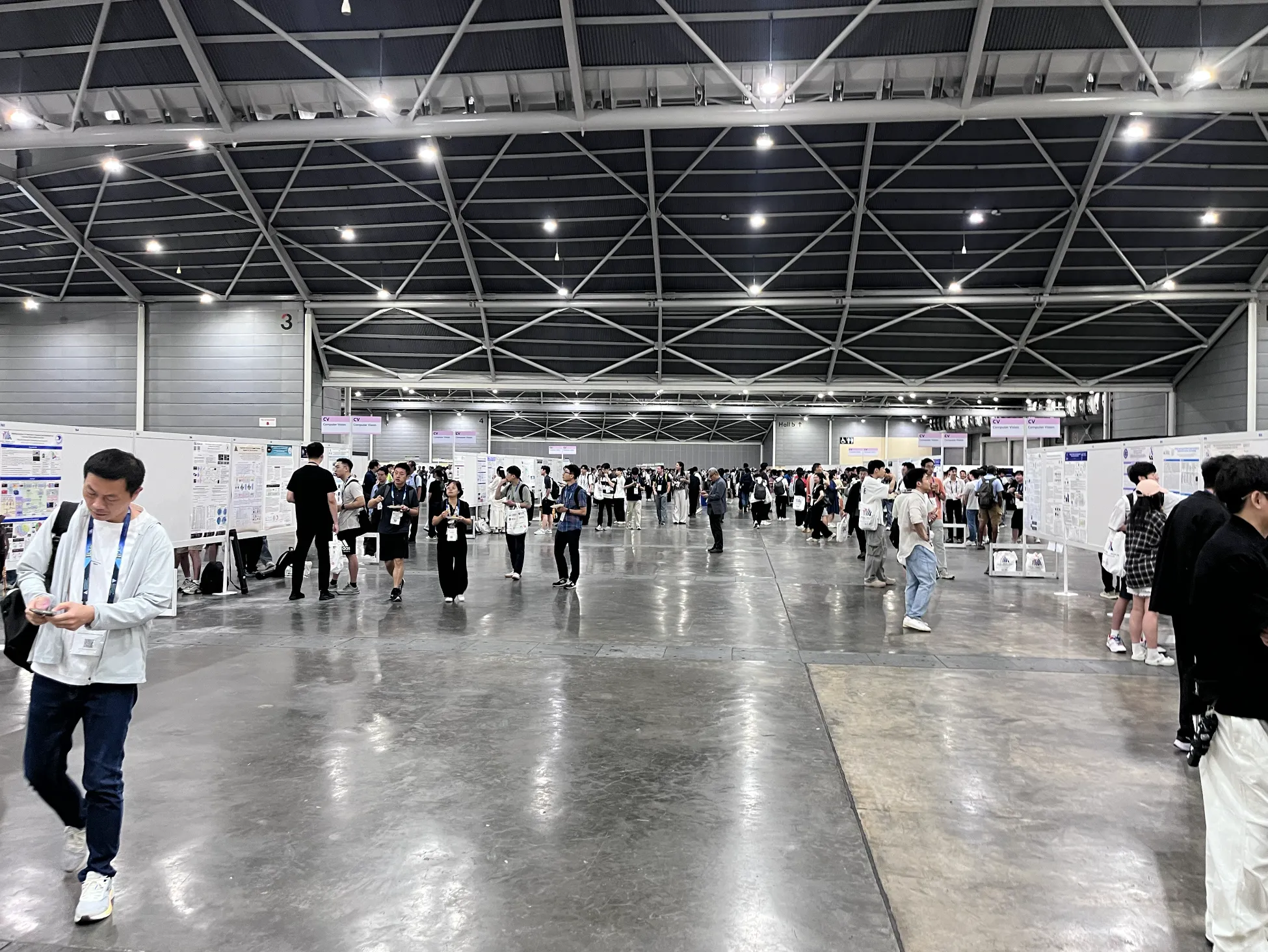
In January 2026, we attended the prestigious global AAAI-26 (Association for the Advancement of Artificial Intelligence) conference in Singapore. What we discovered there confirmed something important: the future of healthcare is not about robots replacing doctors, but about technology giving them back the time to care for their patients.
Imagine visiting your doctor and there’s no screen standing between you. The doctor isn’t frantically typing on a keyboard or buried in administrative forms. Instead, they look you in the eye, listen actively, and truly focus on you. Does this sound like a utopian vision from the last century? Paradoxically, it may be the latest advances in artificial intelligence that will bring us back to exactly that ideal.
This month we had the honor of attending the 40th edition of the prestigious AAAI-26 (Association for the Advancement of Artificial Intelligence) conference in Singapore. We weren’t there just to observe the latest trends, but also to validate our own approach while building the Bonboneo technology platform.
The message from the world’s leading experts was clear: AI in healthcare is not here to remove the human touch. It is here to save it. We weren’t there just to observe the latest trends, but also to validate our own approach while building the Bonboneo technology platform.
The end of shallow medicine
Modern healthcare is facing a crisis that leading experts – including cardiologist Dr. Eric Topol – describe as shallow medicine.
Doctors are overloaded, burned out, and increasingly forced into the role of glorified administrators and “data clerks.” The average patient visit today lasts only a few minutes, and much of that time is spent looking at electronic medical records instead of communicating with the patient.
The result is incomplete data, missing context, and most importantly, the absence of human presence and empathy.
At the Singapore conference, one concept resonated strongly: keyboard liberation – freeing doctors from their keyboards.
This is exactly the problem we are addressing with Bonboneo and our virtual nurse. Our goal isn’t simply to digitize appointment calendars. Through advanced voice transcription and AI agents, we aim to remove administrative burden from doctors entirely.
From chatbots to digital medical councils
Part of our program in Singapore included attending highly specialized workshops, including the Workshop on Health Intelligence (W3PHIAI-26) focused on the use of AI agents in biomedicine.
What we learned is that the industry is rapidly moving beyond simple language models and chatbots toward complex multi-agent systems.
In practice, this means a system doesn’t simply respond to a patient with an automated answer. While one AI agent collects symptoms from the patient, another evaluates potential risks in the background, reviews their medical history, and predicts possible future health outcomes.
This is exactly the direction we are implementing in our own development. With Bonboneo, we are moving healthcare from a reactive model – where a patient gets sick and then looks for an appointment – toward predictive and proactive care.
Local roots, global vision
Our time in Singapore wasn’t only about research and theory. As a technology scale-up with ambitions beyond Central Europe, we also used the opportunity to explore business partnerships.
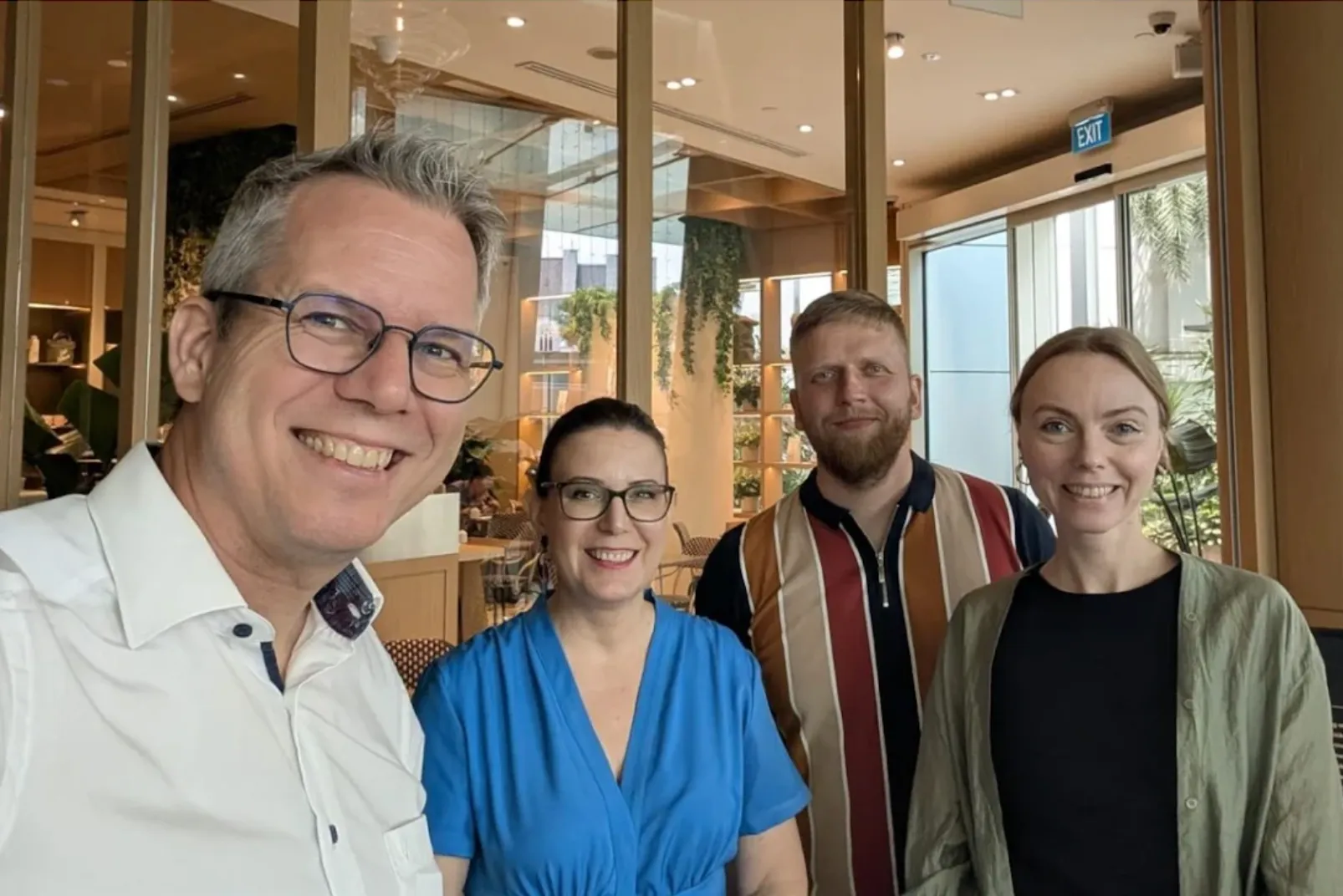
We held key meetings with representatives of the CEEC (Central and Eastern European Chamber of Commerce) in Singapore, discussing potential strategic partnerships and a pilot deployment of our technology in the dynamic ASEAN region.
International partners highly value our privacy-first approach. In today’s world, medical data security is paramount. The fact that our technology is designed around strict privacy principles and can adapt to rigorous regulatory frameworks – such as Asia’s PDPA and Europe’s GDPR – opens doors to global markets.
The gift of time
The greatest opportunity AI brings to healthcare is not only reducing errors or administrative workload. It is something even more valuable: the gift of time.
With that time returned, doctors can focus again on the core of their profession – healing, empathy, and building meaningful relationships with patients. This is the foundation of what is often called deep medicine.

From AAAI-26 we brought back not only valuable technical knowledge about neural networks and unstructured data processing, but also strong confirmation that Bonboneo is building the right thing.
We are building a system that absorbs the complexity of modern healthcare bureaucracy, handles it in the background, and brings back the most valuable element to the clinic: the human touch.
Stay with us. What we saw in Singapore as the future of healthcare is already being turned into code in the Bonboneo platform today.